 Innovation leads to value

0769 8307 8360

sales@henmey.com

No.53 Chashan Town, Dongguan city, Guangdong province
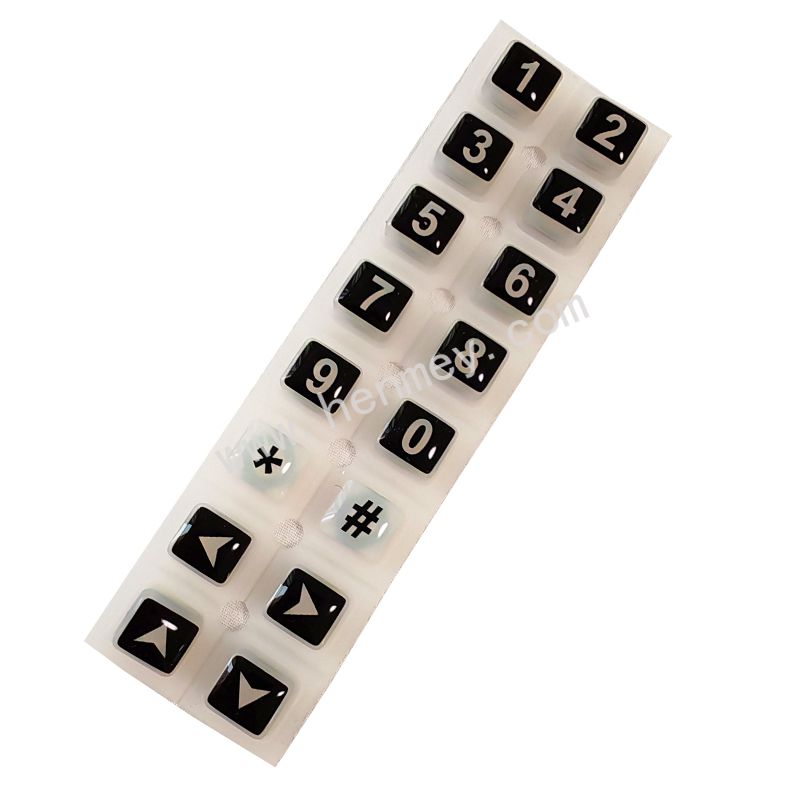

Silicone rubber with epoxy
Through the combination of printing, epoxy and translucent silicone processes, while retaining the inherent advantages of silicone material, the product further enhances its appearance expressiveness, functional practicality, and durability—resulting in clear and long-lasting patterns and an upgraded appearance texture.
Product Detail
Product Parameters:
| Material | Silicone rubber | Hardness | 50+-5 shore A |
| Operating temperature | -60~220℃ | Force | 180+-50gm |
| Color | Transparent | Character | Printing |
| Contact | Carbon pills or not | Process | Vulcanization |
| Finished | Epoxy | Environmental Protection | Compliance with RoHS and REACH |
Protection and Durability Advantages: Dual Protection for Extended Keypad Lifespan
The epoxy layer acts as a 'protective film' on the surfaces of the printed layer and silicone rubber substrate. It significantly enhances the key’s resistance to wear and tear, addressing the issues of easily worn printing and prone-to-contamination surfaces' in traditional silicone keys.
- Wear Resistance: Prevents printed layer peeling, ensuring long-lasting clear markings
Purely printed silicone keys often have surface characters that become worn and blurred due to daily pressing, finger friction, or cleaning wipes. In contrast, the epoxy layer has high hardness and strong friction resistance. It fully covers the printed layer, isolating the pattern from direct external friction. Even with long-term, high-frequency use, the printed characters remain clear, avoiding the problem of 'unrecognizable markings.' - Corrosion and Stain Resistance: Easy-to-clean surface for complex environments
The surface of the epoxy layer is smooth and hydrophobic, making it less likely to absorb contaminants such as dust, oil, and sweat. During daily use, oil stains and water droplets only stay on the surface of the potting adhesive and can be easily wiped clean with a damp cloth. Additionally, the epoxy layer is resistant to acids, alkalis, and alcohol, making it suitable for scenarios like kitchen appliances, medical equipment, and bathroom devices. This prevents the silicone substrate or printed layer from aging or discoloring due to chemical corrosion. - Aging Resistance: Slows silicone oxidation for improved overall durability
The epoxy layer blocks direct contact between ultraviolet rays, ozone, and the silicone substrate, slowing down the silicone’s aging process , such as preventing yellowing, hardening, and reduced elasticity of the silicone. At the same time, the epoxy has strong adhesion to silicone rubber, so issues like 'cracking or delamination of the epoxy' do not occur during long-term use. The overall lifespan of the keys can be extended by 30% to 50% compared to printed silicone keys without epoxy.


 Copy product links
 Long by picture save/share
INQUIRY


Mobile: 0769 8307 8360
lE-mail: sales@henmey.com
Address: No 53. Chashan town, Dongguan city, Guangdong province, China.
© 2020 Henmey All rights reserved Site Map

点击右上角
分享给朋友吧
